On this page
Note: This article was published in October 2024. Its forecasts, figures, and “what to expect” framing reflect that time; for the current picture, please see our latest coverage.
As the U.S. accelerates its efforts toward a sustainable future, renewable energy has become a focal point of national policy and economic growth. In 2024, the push for clean energy technologies like solar, wind, and electric vehicles (EVs) will continue reshaping the energy sector. This article explores the top renewable energy trends to watch, along with the benefits and challenges of green energy adoption, and what the future holds for the U.S. energy landscape.
2024 Renewable Energy Trends
1. Solar and Wind Power Expansion
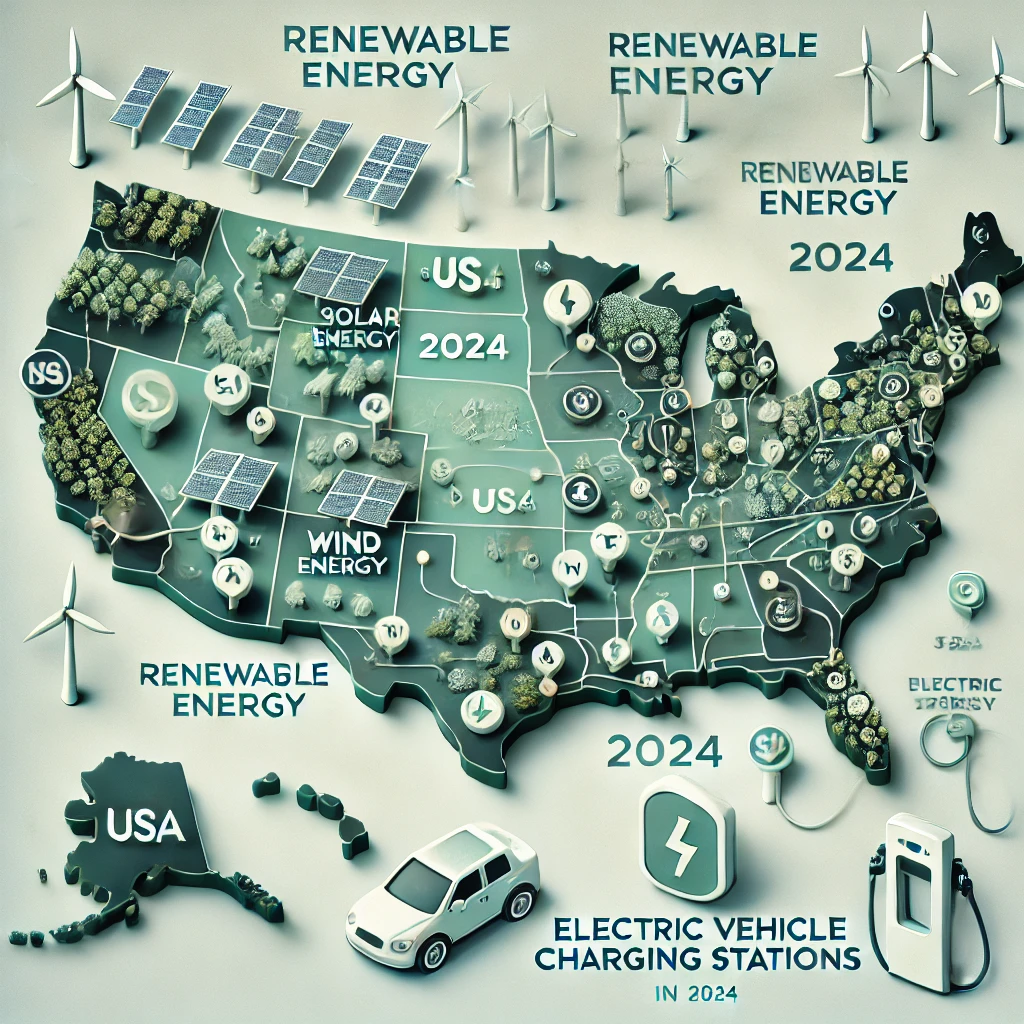
Solar and wind energy are leading the renewable charge across the U.S., with projects expanding in size and accessibility. Solar technology is evolving rapidly, making it more affordable and efficient. States like Texas and California are pioneering wind energy, building larger farms and optimizing energy distribution through improved grid integration.
Key Solar and Wind Stats for 2024:
- Solar Power: The cost of solar power has decreased by nearly 90% over the past decade, and new solar projects in 2024 are expected to add over 100 gigawatts (GW) of capacity.
- Wind Power: The U.S. is projected to add another 60 GW of wind capacity by the end of 2024, primarily in wind-rich regions like the Midwest.
2. Investment in Clean Technology
Green investments are on the rise as the government introduces new incentives to support clean technology development. Federal policies like the Inflation Reduction Act (IRA) provide tax credits for businesses and individuals investing in renewable energy infrastructure, while venture capital interest in green technology startups is increasing.
3. Electric Vehicle (EV) Growth and Impact
Electric vehicles (EVs) are transforming transportation and energy usage in the U.S. The demand for EVs is directly impacting the renewable energy sector as more charging stations utilize solar and wind power to minimize carbon footprints. This trend supports cleaner transportation and reduces dependence on fossil fuels.
| Renewable Energy Source | Projected Growth by 2024 | Associated Benefits |
|---|---|---|
| Solar Power | +100 GW | Lower costs, reduced carbon emissions |
| Wind Power | +60 GW | Reliable, scalable, minimal environmental impact |
| Electric Vehicle Charging | Increased 200% by 2024 | Reduced oil dependency, cleaner transportation |
Benefits and Challenges of Renewable Energy Adoption
1. Cost Benefits and Long-Term Savings
Renewable energy adoption can result in significant cost savings over time. For example, solar panel installations typically pay for themselves in 7-10 years through lower electricity bills, with an average lifespan of 25-30 years. Additionally, businesses and households can take advantage of federal tax credits and state-level incentives to offset installation costs.
2. Challenges in Scaling Renewable Infrastructure
Despite the advantages, renewable energy expansion faces obstacles. Infrastructure, particularly energy storage, needs to keep pace with production to ensure reliability. Scaling up renewables also requires significant investment in transmission lines, especially in rural areas where wind and solar projects are often located.
Future of Renewable Energy in the U.S.
Looking forward, renewable energy growth will likely accelerate, driven by supportive federal and state policies. Both the public and private sectors are increasing commitments to reduce emissions and transition to cleaner energy sources. The Biden administration has set a target of achieving 100% clean electricity by 2035, and this ambitious goal will shape future developments in solar, wind, and battery storage technology. The same forces show up in the wider economy: our The 2024 U.S. Economic Outlook looks at the key trends behind that growth and what they mean for investors.
Predicted trends include:
- Enhanced Energy Storage: Development of efficient battery technologies to store excess renewable energy.
- Grid Modernization: Integrating smart grids that can handle intermittent energy sources more effectively.
- Decentralized Energy Production: Increased use of local renewable energy sources to support community grids and reduce grid congestion.
Three trends, three different kinds of change
The three trends the article names are three different kinds of change, and keeping them separate makes the 2024 picture easier to read. Solar and wind expansion is a change in capacity: projects expanding in size and accessibility, solar technology evolving to be more affordable and efficient, and states like Texas and California pioneering wind energy with larger farms and improved grid integration. Investment in clean technology is a change in money: federal policies like the Inflation Reduction Act providing tax credits for businesses and individuals, and venture capital interest in green technology startups increasing. Electric vehicle growth is a change in demand: EVs transforming transportation and energy usage, with more charging stations utilizing solar and wind power to minimize carbon footprints. Capacity, money, demand — three trends, and the article’s own note still applies: all of it reflects October 2024, and the current picture belongs to later coverage.
The benefits and the challenges are the same story
The benefits section and the challenges section describe the same transition from opposite sides. On the benefits side, renewable adoption can result in significant cost savings over time, with solar installations paying for themselves through lower electricity bills, and federal tax credits and state-level incentives offsetting installation costs. On the challenges side, the same expansion needs storage to keep pace with production, and significant investment in transmission lines, especially in rural areas where wind and solar projects are often located. The three predicted trends the article lists — enhanced energy storage, grid modernization, and decentralized energy production — are best read as the bridge between the two sides: each one answers a challenge the article has already named. The article’s forward look is a prediction from October 2024, not a report on today.
Conclusion
The rise of renewable energy in the U.S. in 2024 highlights a significant transformation in the country’s energy market. Solar and wind are becoming more accessible, and electric vehicles are driving further adoption of green technologies. While challenges remain, the potential for long-term cost savings, environmental impact reduction, and energy security make renewable energy a promising and sustainable option for the future. By staying informed about these trends, businesses, policymakers, and consumers can better support the growth of clean energy.
For the latest updates on renewable energy, visit the U.S. Department of Energy and explore global renewable trends through the International Renewable Energy Agency.
Additional Resources:
- Environmental Protection Agency (EPA) – Insights on U.S. policies and programs for renewable energy.
- BloombergNEF – Analysis and data on the clean energy transition.
Related reading: Effective Wealth Management and Financial Independence: A Path to Achieving Financial Freedom